

How Skin Changes During Pregnancy, and What Is Safe to Use
Medically reviewed by
4 independent reviewers
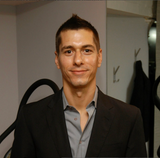
Andrew Conrad Barile, PT, DPT
Doctor of Physical Therapy (DPT) | Licensed Physical Therapist (PT) | CEO and Founder, Xtreem Pulse LLC
Read bio
Dr. Andrew Conrad Barile is a Doctor of Physical Therapy and the CEO and Founder of Xtreem Pulse LLC, the engineering company behind PureLift. He earned his Doctorate in Physical Therapy from Daemen College and is a licensed physical therapist.
He brings over two decades of clinical and entrepreneurial experience across physical therapy, craniosacral therapy and medical device innovation, built on a working knowledge of human anatomy and muscle physiology.
For PureLift LAB he reviews how current is delivered across all ten levels, from sub-sensory nanocurrent and skin-level microcurrent to motor-level EMS, and how the Infuse pass fits into the same ten-minute routine.
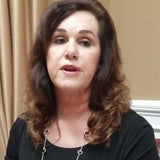
Bertica M. Rubio, M.D.
Board-Certified Physician, Dartmouth Medical School | Medical Director, Antiaging Regenerative Medicine Clinic
Read bio
Dr. Bertica M. Rubio is a board-certified physician and Medical Director of the Antiaging Regenerative Medicine Clinic in Redlands, California. She earned her Doctor of Medicine from Dartmouth Medical School and completed her pediatrics residency at UC Irvine Medical Center.
With decades of clinical experience, she specialises in age management medicine, regenerative medicine, wound healing and growth factor therapies, and her practice integrates evidence-based medical science with advanced aesthetic treatment.
For PureLift LAB she reviews articles for medical accuracy across the whole dial, from the gentle nanocurrent and microcurrent settings through to muscle-level EMS and the Infuse pass.

Daniel Grinberg, MD, FACS
Board-Certified Otolaryngologist | Head and Neck Surgeon | Fellow, American College of Surgeons | Mount Sinai
Read bio
Daniel Grinberg, MD, FACS is a board-certified otolaryngologist and head and neck surgeon at ENT and Allergy Associates in West Nyack, New York. He earned his medical degree from Columbia University College of Physicians and Surgeons.
He completed his otolaryngology residency at New York University Medical Center, serves as Assistant Clinical Professor at Mount Sinai School of Medicine, and is a Fellow of both the American College of Surgeons and the American Academy of Otolaryngology.
For PureLift LAB he brings a wider clinical lens, connecting at-home facial stimulation from microcurrent to EMS to the anatomy underneath, with the same rigour we apply to every device specification.

Prof. Dr. med. Ivo Buschmann
Chair of Angiology, Medizinische Hochschule Brandenburg | Clinic Director, University Clinic for Angiology
Read bio
Prof. Dr. med. Ivo Buschmann is Chair of Angiology at the Medizinische Hochschule Brandenburg Theodor Fontane and Clinic Director of the University Clinic for Angiology at the Brandenburg University Hospital.
He trained at the University of Hamburg, was a Max Planck Society Fellow at the Max Planck Institute for Heart and Lung Research, and held senior consultant posts at the Charite Universitatsmedizin Berlin before his appointment as Chair in 2016.
One of Europe's leading authorities on arteriogenesis, with over 150 peer-reviewed publications and US and EU patents, he reviews for PureLift LAB how the evidence on electrical stimulation is read and where its limits lie.
Share
Three changes turn up most often: melasma, new sensitivity to products that were previously fine, and acne in people who had not had it for years.
This article sets out what to check before you start, such as:
- Melasma, the most common change
- New sensitivity
- Acne
- Puffiness
- The device question
and many more!
On the device question, pregnancy is a contraindication in the instructions for our models; the separate page on that explains why and this one is about the skin.
Key Points:
Retinoids are the clearest thing to stop, and your midwife or doctor is the one to confirm the full list with.
Melasma is much more common now and is provoked by heat, friction and visible light as well as sun.
Tinted mineral sunscreen does more than any other product on this page.
Fluid retention increases, so a puffier face is physiology rather than something to treat.
Simpler is better; this is not the period to introduce anything new.
Melasma, the most common change
Patches of darker pigment across the cheeks, forehead and upper lip are common during pregnancy, and they are provoked by more than sunlight.
Heat provokes melasma, so hot showers, hot weather and cooking over a stove all contribute independently of sun exposure. Friction provokes it too, which is why aggressive treatment aimed at removing it often deepens it. And visible light contributes as well as ultraviolet, which is why a clear sunscreen may not be enough.
Tinted mineral sunscreen is the recommendation, because the iron oxides block visible light that a clear formula does not. Reapplied, daily, including indoors near windows.
Most pregnancy melasma fades in the months after birth, though not always completely, and treating it aggressively while pregnant tends to go badly.
New sensitivity
Products that were comfortable for years can start stinging, and skin can flush more easily than it used to.
The response is to simplify rather than to find a gentler version of everything. A plain cleanser, a plain moisturiser and sunscreen will carry most people through, and anything you add on top is optional.
This is not the period to introduce a new product, since a reaction now is harder to interpret and less comfortable to sit through.
Acne
Breakouts are common and frustrating, partly because several of the usual treatments are exactly what you have been told to avoid.
What is on the avoid list, and what is acceptable, is a question for your midwife, obstetrician or GP rather than for a skincare article. Retinoids are the clearest one to stop; beyond that, ask rather than assume, in either direction.
Gentle cleansing and not picking are the unglamorous parts that still apply.
Puffiness
Fluid retention increases through pregnancy, so a fuller face is physiology rather than something to fix.
Light drainage with your hands, outward toward the ear and then down the neck, helps the same way it helps anyone, and it needs no device. Sleeping with the head slightly raised helps too.
Swelling that is sudden, severe, or accompanied by headaches or visual changes is a reason to contact your midwife or doctor promptly rather than to massage, and that is the one thing on this page worth remembering above the rest.
The device question
Pregnancy is listed as a contraindication in the instructions for PureLift models, and that reflects the absence of research in pregnant populations rather than a documented harm. The instruction stands regardless, so the answer is not to use one unless the clinician looking after you says otherwise.
The serum question is worth raising separately, since ingredients can be absorbed through skin and a device distributes them far more thoroughly. Whatever you have been told to avoid topically is the last thing you want in Infuse mode.
The cumulative work a device does is measured in months, so setting it aside for this period costs nothing that cannot be picked up afterwards.
The routine that works
Gentle cleanser, plain moisturiser, tinted mineral sunscreen every day, and not much else.
Ask before adding anything, including things that seem obviously harmless.
For the device and breastfeeding question in full, see facial devices while pregnant or breastfeeding, and for melasma specifically, melasma and facial devices.
This is general information and not medical advice. Every question about your pregnancy, including which skincare ingredients are appropriate, belongs with the midwife or doctor looking after you.
Two related questions come up often alongside this one, and we have answered both in full: why we decline to give a safety answer in pregnancy, and what the nerve damage question actually comes down to.