

A Ten-Minute Depuffing Routine for a Rushed Morning
Medically reviewed by
4 independent reviewers
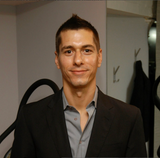
Andrew Conrad Barile, PT, DPT
Doctor of Physical Therapy (DPT) | Licensed Physical Therapist (PT) | CEO and Founder, Xtreem Pulse LLC
Read bio
Dr. Andrew Conrad Barile is a Doctor of Physical Therapy and the CEO and Founder of Xtreem Pulse LLC, the engineering company behind PureLift. He earned his Doctorate in Physical Therapy from Daemen College and is a licensed physical therapist.
He brings over two decades of clinical and entrepreneurial experience across physical therapy, craniosacral therapy and medical device innovation, built on a working knowledge of human anatomy and muscle physiology.
For PureLift LAB he reviews how current is delivered across all ten levels, from sub-sensory nanocurrent and skin-level microcurrent to motor-level EMS, and how the Infuse pass fits into the same ten-minute routine.
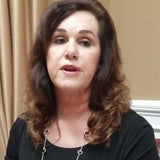
Bertica M. Rubio, M.D.
Board-Certified Physician, Dartmouth Medical School | Medical Director, Antiaging Regenerative Medicine Clinic
Read bio
Dr. Bertica M. Rubio is a board-certified physician and Medical Director of the Antiaging Regenerative Medicine Clinic in Redlands, California. She earned her Doctor of Medicine from Dartmouth Medical School and completed her pediatrics residency at UC Irvine Medical Center.
With decades of clinical experience, she specialises in age management medicine, regenerative medicine, wound healing and growth factor therapies, and her practice integrates evidence-based medical science with advanced aesthetic treatment.
For PureLift LAB she reviews articles for medical accuracy across the whole dial, from the gentle nanocurrent and microcurrent settings through to muscle-level EMS and the Infuse pass.
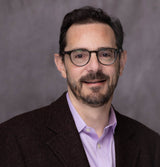
Daniel Grinberg, MD, FACS
Board-Certified Otolaryngologist | Head and Neck Surgeon | Fellow, American College of Surgeons | Mount Sinai
Read bio
Daniel Grinberg, MD, FACS is a board-certified otolaryngologist and head and neck surgeon at ENT and Allergy Associates in West Nyack, New York. He earned his medical degree from Columbia University College of Physicians and Surgeons.
He completed his otolaryngology residency at New York University Medical Center, serves as Assistant Clinical Professor at Mount Sinai School of Medicine, and is a Fellow of both the American College of Surgeons and the American Academy of Otolaryngology.
For PureLift LAB he brings a wider clinical lens, connecting at-home facial stimulation from microcurrent to EMS to the anatomy underneath, with the same rigour we apply to every device specification.

Prof. Dr. med. Ivo Buschmann
Chair of Angiology, Medizinische Hochschule Brandenburg | Clinic Director, University Clinic for Angiology
Read bio
Prof. Dr. med. Ivo Buschmann is Chair of Angiology at the Medizinische Hochschule Brandenburg Theodor Fontane and Clinic Director of the University Clinic for Angiology at the Brandenburg University Hospital.
He trained at the University of Hamburg, was a Max Planck Society Fellow at the Max Planck Institute for Heart and Lung Research, and held senior consultant posts at the Charite Universitatsmedizin Berlin before his appointment as Chair in 2016.
One of Europe's leading authorities on arteriogenesis, with over 150 peer-reviewed publications and US and EU patents, he reviews for PureLift LAB how the evidence on electrical stimulation is read and where its limits lie.
Share
This is the short version for a morning where you need your face to look better in ten minutes and do not need to know why.
This article covers what actually decides the answer, such as:
- Minute one to two, get vertical and drink
- Minute three to four, clear the neck
- Minute five to eight, work the face outward
- Minute nine to ten, cold
- The two mistakes
and many more!
Two common mistakes waste about half the effect, and both are covered at the end.
Key Points:
Stand up and move first; gravity and muscle movement do more than any technique.
Clear the neck before you touch the face, since that is where the route exits.
Press far lighter than feels useful; the vessels sit just under the skin.
Cold at the end rather than the beginning.
Allow two hours before anyone photographs you, not fifteen minutes.
Minute one to two, get vertical and drink
Stand up and walk about. Being upright lets gravity work with you, and moving restarts the muscle contraction that lymph relies on, which is the mechanism doing most of the work this morning.
Drink a glass of water while you do it. Overnight dehydration makes the body hold fluid, so rehydrating helps rather than adding to the problem.
If you have only two minutes, these are the two, and they beat any technique below.
Minute three to four, clear the neck
Slow strokes down the sides of the neck, from just below the ear toward the collarbone, five or six times each side.
Then a few above the collarbone working inward.
This is the step everyone skips and it is the one that makes the rest work, because pushing fluid from the face toward a congested route achieves very little.
Minute five to eight, work the face outward
Jaw first: from the centre of the chin along the jawline out toward the ear, six times each side.
Cheek next: from beside the nose outward across the cheek toward the ear.
Under the eye, very lightly, from the inner corner outward toward the temple. Use the pad of the ring finger, since it presses least.
Forehead: from the centre outward toward each temple.
Then down: from the temples, in front of the ear, down the neck to the collarbone, clearing everything you have just moved.
With a device, the same strokes at a low level. On PureLift, levels 1 and 2 are nanocurrent and microcurrent and contract nothing, which is the right band for a drainage pass. Three minutes per side is the maximum and the ten minute session ends on its own.
Minute nine to ten, cold
Cold constricts the vessels and reduces the appearance within minutes, so a chilled stone, a cold flannel or a few seconds of cool water at the end sharpens the result.
At the end rather than the beginning, because constricted vessels move less fluid and you want the drainage done first.
Then moisturiser and sunscreen as usual.
The two mistakes
Pressing too hard. The lymph vessels in the face sit just under the skin, so firm pressure closes them rather than emptying them. The test is whether the skin moves under your fingers without you feeling bone or muscle underneath.
Dragging downward along the jawline. It feels like pulling something taut and it moves fluid away from the drainage route. Always toward the ear, then down the neck.
Timing it around an event
Do this two to three hours before anyone sees you rather than fifteen minutes before, so any transient flush has settled.
Most of the overnight fluid clears on its own within about ninety minutes of being upright, so the routine is buying you the same endpoint sooner rather than a different one.
It will be back tomorrow morning, which is what drainage does rather than a failure of it.
If it does not work
Check last night: salt, alcohol and a short sleep each make the starting point worse, and the routine cannot fully undo any of the three.
If puffiness persists through the day, or affects one side only, that is a question for a doctor rather than for a morning routine.
For the mechanism, see the science behind facial depuffing, and for the full stroke sequence, drainage massage technique.