

Facial With Microcurrent, What Happens at a Salon Appointment
Medically reviewed by
4 independent reviewers
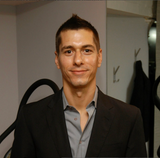
Andrew Conrad Barile, kinésithérapeute, DPT
Doctorat en physiothérapie (DPT), physiothérapeute agréé (PT)
Read bio
Le Dr Andrew Conrad Barile est docteur en physiothérapie et PDG ainsi que fondateur de Xtreem Pulse LLC. Il a obtenu son doctorat en physiothérapie à Daemen College et possède plus de vingt ans d'expérience clinique et entrepreneuriale en physiothérapie pédiatrique, thérapie craniosacrale et innovation en dispositifs médicaux. Sa profonde connaissance de l'anatomie humaine, de la physiologie musculaire et des technologies thérapeutiques offre une approche scientifique précieuse pour le rajeunissement du visage et les solutions anti-âge.
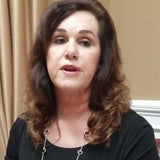
Bertica M. Rubio, M.D.
Directeur Médical, Clinique de Médecine Régénérative Anti-âge | Médecin Certifié par le Conseil | École de Médecine de Dartmouth
Read bio
Le Dr Bertica M. Rubio est une médecin certifiée et directrice médicale de la clinique de médecine régénérative anti-âge à Redlands, en Californie. Elle a obtenu son Bachelor of Science à l'Université Loyola Marymount et son Doctorat en médecine à la Dartmouth Medical School (Geisel School of Medicine). Elle a effectué sa résidence en pédiatrie au UC Irvine Medical Center.
Forte de plusieurs décennies d'expérience clinique, le Dr Rubio est spécialisée en médecine de gestion du vieillissement, médecine régénérative, cicatrisation des plaies et thérapies par facteurs de croissance. Sa pratique intègre la science médicale fondée sur des preuves avec des traitements esthétiques et régénératifs avancés, aidant les patients à atteindre une santé optimale et une vitalité juvénile.
Le Dr Rubio est passionnée par l'éducation des patients sur la science derrière les soins de la peau, le rajeunissement du visage et les technologies non invasives comme l'EMS (stimulation électrique musculaire) pour le tonus facial. Ses articles pour PureLift LAB allient connaissances médicales rigoureuses et conseils pratiques pour obtenir des résultats réels et durables.
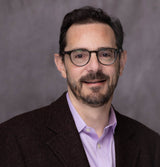
Daniel Grinberg, MD, FACS
Otolaryngologiste et chirurgien de la tête et du cou certifié par le conseil | Membre, American College of Surgeons | Professeur clinique adjoint, Mount Sinai School of Medicine
Read bio
Daniel Grinberg, MD, FACS, est un oto-rhino-laryngologiste certifié par le conseil et chirurgien de la tête et du cou chez ENT and Allergy Associates à West Nyack, NY. Il a obtenu son diplôme de médecine au Columbia University College of Physicians and Surgeons, a effectué sa résidence en oto-rhino-laryngologie au New York University Medical Center, et est professeur clinique adjoint à la Mount Sinai School of Medicine. Il est membre de l'American College of Surgeons et de l'American Academy of Otolaryngology.
La perspective chirurgicale de la tête et du cou du Dr Grinberg offre aux lecteurs de PureLift LAB une vision clinique élargie — reliant la pratique EMS à domicile à l'anatomie médicale sous-jacente avec la même rigueur scientifique que celle que nous appliquons à chaque spécification d'appareil.

Prof. Dr med Ivo Buschmann
Président d'Angiologie, Hochschule Medizinische Brandenburg | Directeur de clinique, Clinique universitaire d'angiologie, Hôpital universitaire de Brandebourg | Ancien consultant principal, Charité Universitätsmedizin Berlin
Read bio
Le Prof. Dr. med. Ivo Buschmann est titulaire de la chaire d'angiologie à la Medizinische Hochschule Brandenburg Theodor Fontane (MHB) et directeur de la clinique universitaire d'angiologie à l'hôpital universitaire de Brandebourg. Il a effectué sa formation médicale à l'Université de Hambourg, a été boursier de la Société Max-Planck à l'Institut Max-Planck de recherche sur le cœur et les poumons, et a occupé des postes de consultant principal à la Charité Universitätsmedizin Berlin Campus Virchow avant d'être nommé titulaire de la chaire à la MHB en 2016.
Le Prof. Buschmann est l'une des principales autorités européennes en arteriogenèse — la croissance et le remodelage des vaisseaux sanguins induits par le flux — avec plus de 150 publications évaluées par des pairs et plusieurs brevets américains et européens sur des dispositifs stimulant la croissance des vaisseaux collatéraux par une thérapie contrôlée du taux de cisaillement. Ses recherches relient la stimulation mécanique et électrique à l'adaptation vasculaire, à la microcirculation et à la perfusion tissulaire.
Les contributions du Prof. Buschmann apportent aux lecteurs de PureLift LAB une perspective en biologie vasculaire qui complète notre expertise clinique, en physiothérapie et en anatomie chirurgicale — expliquant comment la stimulation EMS engage non seulement les muscles faciaux mais aussi la microcirculation qui les alimente, et pourquoi une administration intelligente est aussi importante au niveau du flux sanguin qu'à celui de la contraction musculaire.
Partager
A facial with microcurrent is a salon treatment where an esthetician cleanses your skin, then uses probes or conductive gloves to send a low current through your facial muscles for a firmer, more lifted look, usually as part of a series.
This article walks you through the appointment, such as:
- what happens before, during and after the treatment
- what it feels like
- how many sessions a salon recommends
- what to ask before you book
- how a salon facial compares with a home device
and many more!
We make home devices, and we recommend a salon series for anyone who wants a trained professional to start them off.
Key Points:
A facial with microcurrent usually lasts thirty to sixty minutes and is often combined with cleansing, exfoliation and a mask.
Most people feel a light tingle or nothing at all, and there is no downtime.
Many people see a lifted, more awake look straight after the appointment, which fades within a day or so.
Lasting results need a series of sessions, which is why salons recommend a course followed by maintenance visits.
A home device makes the frequent sessions results depend on practical, and many people combine a salon series with home use.
What a facial with microcurrent is
It is a facial treatment built around a professional microcurrent machine. The esthetician uses handheld probes, rollers or conductive gloves to deliver a low current through the skin into the facial muscles.
The aim is a firmer, more lifted look across the jaw, cheeks and brows, with a brighter, more awake appearance straight after the session.
How the technology works is in our microcurrent facial guide.
What happens at the appointment
Before the treatment
The esthetician asks about your health, skincare and any recent injectables, and checks for reasons not to treat you, such as a pacemaker, pregnancy or epilepsy.
Your skin is cleansed to remove makeup and oil, and sometimes exfoliated.
During the treatment
A conductive gel is applied, and the esthetician works the probes or gloves along set paths, holding at points along the jaw, cheeks, forehead and brows.
Settings are adjusted as they go, and one side of the face is often finished first so you can see the difference.
The zones and directions they follow are in our microcurrent on face zone guide.
After the treatment
The gel is removed, and many salons finish with a mask, serum and moisturizer. You can put makeup on and go straight back to your day.
What it feels like
Most people feel a light tingle, a mild metallic taste or nothing at all. Probes held near the jaw or teeth can make the sensation more noticeable.
It should never hurt. Tell the esthetician if it stings, which usually means the gel has dried. More on the sensation is in our article on what a microcurrent facial feels like.
How many sessions you need
One session gives a short-lived lift. Lasting change comes from repetition, so most salons recommend a series of weekly or twice weekly sessions, followed by maintenance visits.
A randomized controlled trial by Kavanagh and colleagues, published in 2012, measured the effect of facial electrical stimulation after twelve weeks of regular use, which shows the time frame a lasting change needs.
What to expect over time is in our week by week results article.
What to ask before you book
What machine do you use, and how long have you trained on it?
How many sessions do you recommend, and what does the full series cost?
Can I combine it with my injectables, and how long should I wait after them?
What results do you expect for my face, and what will it not change?
Our checklist for finding the right person is in our guide to finding a good microcurrent esthetician.
Salon facial vs a home device
A salon gives you more control and a relaxing treatment. A home device gives you frequency at a lower cost per session.
The cost comparison is in our salon vs device cost article, and the side by side is in our home vs salon machine article.
Our devices run nanocurrent at level 1, microcurrent at level 2 and EMS from level 3 to 10, plus an Infuse pass, on one dial, with a ten minute session and no more than three minutes per side of the face, and they work with any water-based conductive serum.
How to get salon-level results at home is in our at home device guide.
Who should not have a facial with microcurrent
Anyone whose main concern is loose skin or lost volume, since microcurrent works on muscle tone.
Do not use any facial current device if you have a pacemaker or other implanted electronic device, if you are pregnant or if you have epilepsy, and skip broken or irritated skin. The full list is in our safety article.
Frequently asked questions
What is a facial with microcurrent
It is a salon facial that uses a professional microcurrent machine to send a low current through the facial muscles for a firmer, more lifted look.
How long does a microcurrent facial take
Usually thirty to sixty minutes, including cleansing and any mask or finishing steps.
Does a microcurrent facial hurt
No. Most people feel a light tingle or nothing at all. Stinging usually means the gel has dried.
How many microcurrent facials do I need
Most salons recommend a series of sessions followed by maintenance visits, since lasting change builds over weeks.
Is there downtime after a microcurrent facial
No. You can wear makeup and return to your day straight away.
This article sits inside our full map of the category, where we set out all 33 devices we track, what each one carries and what each brand publishes: Nine Technologies on One Dial, What the Rest of the Market Actually Carries.