

Professional Microcurrent Machine, What Estheticians Should Look For
Medically reviewed by
4 independent reviewers
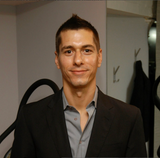
Andrew Conrad Barile, Physiotherapeut, Doktor der Physiotherapie
Doktor der Physiotherapie (DPT), Lizenzierter Physiotherapeut (PT)
Read bio
Dr. Andrew Conrad Barile ist Doktor der Physiotherapie sowie CEO und Gründer von Xtreem Pulse LLC. Er erwarb seinen Doktortitel in Physiotherapie am Daemen College und bringt über zwei Jahrzehnte klinische und unternehmerische Erfahrung in der pädiatrischen Physiotherapie, Craniosacraltherapie und medizinischen Geräteinnovation mit. Sein tiefes Verständnis der menschlichen Anatomie, Muskelphysiologie und therapeutischen Technologie bietet einen wissenschaftlich fundierten Ansatz für Gesichtsverjüngung und Anti-Aging-Lösungen.
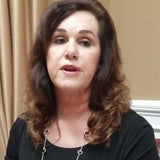
Bertica M. Rubio, M.D.
Medizinischer Direktor, Anti-Aging-Regenerationsmedizinische Klinik | Facharzt | Dartmouth Medical School
Read bio
Dr. Bertica M. Rubio ist eine zertifizierte Ärztin und medizinische Leiterin der Anti-Aging-Regenerationsklinik in Redlands, Kalifornien. Sie erwarb ihren Bachelor of Science an der Loyola Marymount University und ihren Doktortitel in Medizin an der Dartmouth Medical School (Geisel School of Medicine). Ihre Facharztausbildung in Pädiatrie absolvierte sie am UC Irvine Medical Center.
Mit jahrzehntelanger klinischer Erfahrung spezialisiert sich Dr. Rubio auf Altersmanagement, regenerative Medizin, Wundheilung und Wachstumsfaktor-Therapien. Ihre Praxis verbindet evidenzbasierte medizinische Wissenschaft mit fortschrittlichen ästhetischen und regenerativen Behandlungen, um Patienten zu optimaler Gesundheit und jugendlicher Vitalität zu verhelfen.
Dr. Rubio ist leidenschaftlich daran interessiert, Patienten über die Wissenschaft hinter Hautpflege, Gesichtsverjüngung und nicht-invasiven Technologien wie EMS (Elektrische Muskelstimulation) zur Gesichtstonung aufzuklären. Ihre Artikel für PureLift LAB verbinden fundiertes medizinisches Wissen mit praktischen Anleitungen für echte, nachhaltige Ergebnisse.
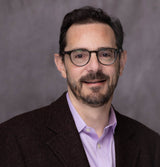
Daniel Grinberg, MD, FACS
Facharzt für Hals-Nasen-Ohren-Heilkunde und Kopf-Hals-Chirurgie | Fellow des American College of Surgeons | Assistenz-Professor für Klinische Medizin, Mount Sinai School of Medicine
Read bio
Daniel Grinberg, MD, FACS, ist ein von der Ärztekammer zertifizierter Hals-Nasen-Ohren-Arzt und Kopf-Hals-Chirurg bei ENT and Allergy Associates in West Nyack, NY. Er erwarb seinen medizinischen Abschluss an der Columbia University College of Physicians and Surgeons, absolvierte seine Facharztausbildung in Hals-Nasen-Ohren-Heilkunde am New York University Medical Center und ist Assistenzprofessor an der Mount Sinai School of Medicine. Er ist Fellow sowohl des American College of Surgeons als auch der American Academy of Otolaryngology.
Dr. Grinbergs Perspektive als Kopf-Hals-Chirurg bietet den Lesern von PureLift LAB eine erweiterte klinische Sichtweise — er verbindet die EMS-Anwendung zu Hause mit der zugrunde liegenden medizinischen Anatomie mit derselben wissenschaftlichen Genauigkeit, die wir auf jede Gerätespezifikation anwenden.

Prof. Dr. med. Ivo Buschmann
Lehrstuhl für Angiologie, Medizinische Hochschule Brandenburg | Klinikdirektor, Universitätsklinik für Angiologie, Brandenburgisches Klinikum | Ehemaliger Oberarzt, Charité Universitätsmedizin Berlin
Read bio
Prof. Dr. med. Ivo Buschmann ist Lehrstuhlinhaber für Angiologie an der Medizinischen Hochschule Brandenburg Theodor Fontane (MHB) und Klinikdirektor der Universitätsklinik für Angiologie am Brandenburgischen Universitätsklinikum. Er absolvierte seine medizinische Ausbildung an der Universität Hamburg, war Max-Planck-Gesellschaft-Stipendiat am Max-Planck-Institut für Herz- und Lungenforschung und hatte leitende Oberarztpositionen an der Charité Universitätsmedizin Berlin Campus Virchow inne, bevor er 2016 zum Lehrstuhlinhaber an der MHB berufen wurde.
Prof. Buschmann ist einer der führenden europäischen Experten für Arteriogenese – das durch Fluss angetriebene Wachstum und die Umgestaltung von Blutgefäßen – mit mehr als 150 begutachteten Veröffentlichungen und mehreren US- und EU-Patenten für Geräte, die das Wachstum von Kollateralgefäßen durch kontrollierte Scherkräfte-Therapie stimulieren. Seine Forschung verbindet mechanische und elektrische Stimulation mit vaskulärer Anpassung, Mikrozirkulation und Gewebeperfusion.
Die Beiträge von Prof. Buschmann bieten den Lesern von PureLift LAB eine gefäßbiologische Perspektive, die unsere bestehenden Autoren aus den Bereichen Klinik, Physiotherapie und chirurgische Anatomie ergänzt – und erklären, wie EMS-Stimulation nicht nur die Gesichtsmuskeln, sondern auch die Mikrozirkulation, die sie versorgt, aktiviert und warum eine intelligente Anwendung auf der Ebene des Blutflusses ebenso wichtig ist wie die Muskelkontraktion.
Teilen
Estheticians should choose a professional microcurrent machine on FDA clearance, a published output and waveform range, the delivery tools it uses, the training and support behind it, and the cost per treatment it allows them to charge for.
This guide covers what to check before you buy, such as:
- FDA clearance and what it covers
- output, waveforms and control
- probes, gloves or handhelds
- training, warranty and support
- cost per treatment and return on investment
and many more!
We make the PureLift Pro range, which is used in professional treatments, so we have written this as a checklist that applies to any machine.
Key Points:
Check that the machine holds an FDA 510(k) clearance for the exact model, and look it up yourself.
A published output and waveform range tells you what the machine can deliver, and a stated load lets you compare brands.
Delivery tools range from probes and gloves to handheld devices, and each suits a different treatment style.
Training, warranty, servicing and the supply of consumables matter as much as the specification.
Work out the cost per treatment, including consumables and your time, before comparing prices.
Why the machine matters
A professional machine is a business investment. It has to deliver consistent results, be safe for every client and pay for itself through treatments.
How professional machines differ from home devices is in our professional vs at home article.
Step one, check the FDA clearance
Ask for the 510(k) number and confirm in the FDA database that it covers the exact model. A clearance for an earlier model does not automatically cover a new one.
How to check is in our guide to checking a clearance.
Step two, check output and waveforms
Ask for the maximum output, the load it was measured at and the range of waveforms and frequencies.
More control lets you tailor treatments, but only if your team is trained to use it. Why the load matters is in our article on why we publish the load.
Step three, choose the delivery tools
Probes
Allow precise work on small muscles and are standard on many tabletop machines.
Conductive gloves
Let the esthetician deliver current through their hands, combining microcurrent with massage.
Handheld devices
Faster to learn, easier to keep consistent between staff and easy to sell on for home maintenance. Our devices run nanocurrent at level 1, microcurrent at level 2 and EMS from level 3 to 10, plus an Infuse pass, on one dial, with three minutes per side of the face as the sweet spot, and no more than five minutes per side, ten minutes in total, and they work with any water-based conductive serum.
Step four, check training, warranty and support
Ask what training is included, whether it is certified and whether new staff can be trained later.
Check the warranty length, the servicing process and how long a repair takes, since a machine out of action costs bookings.
Check the price and supply of consumables such as gels, probes and tips.
Step five, work out the cost per treatment
Add the machine price, consumables per session and your time, then divide by the treatments you expect in its working life.
Compare that figure with what you can charge, covered in our salon vs device cost article.
How PureLift fits in professional treatments
Our Pro range is used in professional treatments, from the Pro at 7 mA to the Pro Plus at 9 mA at 500 ohms, cleared under K230506 and K221443, made in Japan in an ISO 13485 facility.
A comparison with tabletop machines is in PureLift Pro Plus vs professional microcurrent machines, and with the Bio-Therapeutic bt-sculpt in PureLift Pro Plus vs Bio-Therapeutic bt-sculpt.
Client screening
Screen every client before treatment. Do not use any facial current device if you have a pacemaker or other implanted electronic device, if you are pregnant or if you have epilepsy, and skip broken or irritated skin. The full list is in our safety article.
What a client experiences in the chair is in our facial with microcurrent article.
Frequently asked questions
What is the best professional microcurrent machine
The best one for your business has a clearance for the exact model, a published output, delivery tools that suit your treatments, strong training and support, and a cost per treatment that works for your pricing.
How much does a professional microcurrent machine cost
Prices vary widely by brand and configuration, so compare on cost per treatment, including consumables and servicing, rather than sticker price.
Do I need training to use a professional microcurrent machine
Yes. Choose a brand that includes certified training and can train new staff later.
Should I choose probes or gloves
Probes suit precise work on small muscles, gloves combine microcurrent with massage, and handheld devices are fastest to learn.
Can a professional machine be used for home maintenance
No. Professional machines are designed for trained users. Many salons sell a home device for maintenance between treatments.
This article sits inside our full map of the category, where we set out all 33 devices we track, what each one carries and what each brand publishes: Nine Technologies on One Dial, What the Rest of the Market Actually Carries.